Drywall is one of the most repairable materials in a house. Holes, dents, cracks and popped screws can almost always be fixed in place, and a good repair disappears under paint. But there are situations where patching is the wrong answer, usually because the drywall itself has lost its strength or the problem behind it has not been solved.
This article walks through the common types of damage, how to decide between repair and replacement, and what to look for before any work starts.
The common types of drywall damage
Nail pops and screw pops
Small round bumps or cracks in a line along a wall or ceiling usually mean a fastener has backed out as framing lumber dried and shifted. These are simple repairs: the fastener is reset or replaced, a new screw is added nearby, and the spot is filled and finished.
Dents and small holes
Furniture dings, picture hooks and anchor holes are the easiest fixes. They are filled with compound, sanded and painted. The only real challenge is making the patch blend with the surrounding sheen.
Larger holes
Doorknobs, falls and removed fixtures can leave holes several inches across. These need a patch, either a mesh patch for mid-sized holes or a new piece of drywall screwed to backing for larger openings, followed by tape and multiple coats of compound.

Cracks
Cracks at the corners of doors and windows, along ceiling seams and where walls meet ceilings usually come from normal house movement or from a joint that was not taped well originally. They can be repaired by opening the crack, re-taping and refinishing. Filling them with compound alone tends to fail.
Water damage
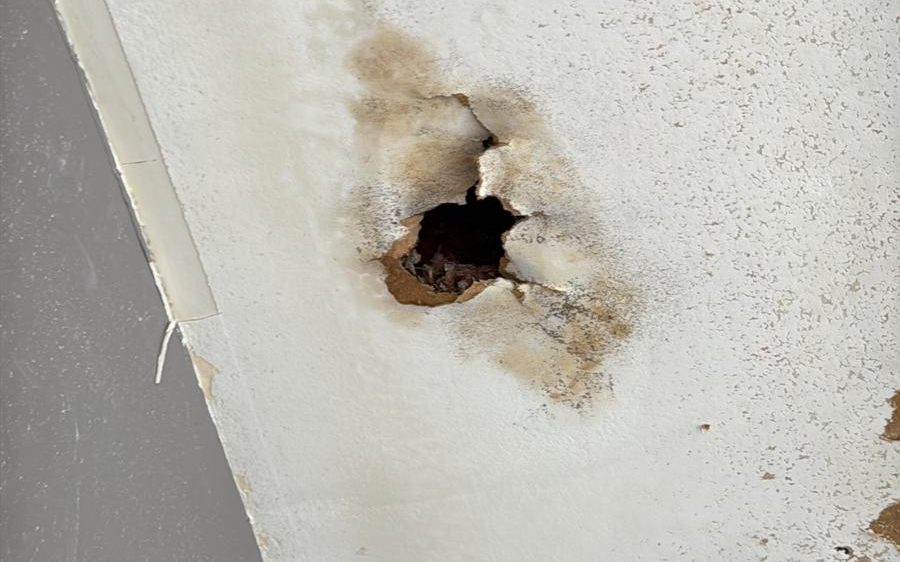
Stains, bubbling paint, softness and sagging point to moisture. This is where the repair-or-replace question matters most.
When replacement is the better choice
Drywall is made of a gypsum core faced with paper. When it gets soaked, the gypsum can soften and the paper can delaminate, and once that happens the panel loses strength and does not recover. Replacement is usually the right call when:
- The drywall feels soft or crumbly when pressed.
- A ceiling panel is sagging between framing members.
- The paper face is peeling away in large areas.
- There are signs of mold growth on or behind the surface.
- The damaged area covers a large portion of a panel, making a patch larger than the replacement.
In these cases the damaged section is cut back to sound material, ideally to the nearest framing, and a new piece is installed, taped and finished. It sounds more dramatic than a patch, but on a finished result the two can look identical.
What to check before any repair
The most important step with water damage is making sure the source is fixed. A plumbing leak, a failing roof flashing, an ice dam from last winter or condensation from a bathroom without proper ventilation will simply damage the new drywall if the cause is not addressed first. Confirm the repair of the source and give the area time to dry completely.

It is also worth thinking about what else is planned for the room. If you are repainting anyway, repairs can be finished and primed and then covered with a full coat of paint, which gives the most uniform result. If you are not repainting, a repair can be touched up with existing paint, though small differences in sheen or color may be visible.
Dealing with leftover stains
Sometimes the drywall is structurally fine but a brown ring remains after a leak. Regular paint will not cover these stains reliably; the discoloration bleeds back through within days. The solution is a stain-blocking primer applied over the dry stain, followed by finish paint. On ceilings, it often makes sense to repaint the entire ceiling plane afterward so the new paint does not stand out against older, slightly yellowed paint.
Doing it yourself or hiring a pro
Small holes and nail pops are reasonable do-it-yourself projects if you are patient. The skills that take practice are feathering compound wide enough to avoid a visible hump, sanding without damaging the surrounding paper, and matching texture on textured walls and ceilings.
For larger repairs, water damage, ceiling work and anything where the finish needs to be invisible, a professional repair usually saves time and frustration. Our drywall repair service covers everything from nail pops to replaced sections, and repairs can be finished with a full interior repaint of the room. Homeowners in West Springfield, Holyoke and Springfield can request an estimate online.
A note on plaster walls
Many older homes in Springfield, Holyoke and West Springfield have plaster walls rather than drywall, and the repair approach is different. Plaster is harder and more brittle, and it is usually applied over wood or metal lath. Cracks in plaster often come from the plaster separating from its lath, which can be felt as a slight give when you press on the wall.
Small plaster cracks and holes can be repaired with compatible compounds and mesh tape, while loose areas may need to be reattached to the lath with specialty fasteners before the surface is finished. In some cases a section of plaster is replaced with drywall that is shimmed to match the thickness of the surrounding wall. The goal is the same as with drywall: a repair that is sound, flat and invisible once painted.
If you are not sure whether your walls are plaster or drywall, a quick look at an outlet or switch box usually tells the story. Plaster walls tend to be noticeably thicker and harder, and they sound solid when tapped. Mentioning the wall type during an estimate helps plan the right repair method and time.
Preventing damage in the first place
Some damage is simply accidental, but a few habits reduce repairs. Door stops prevent doorknob holes. Properly rated anchors, or screws into studs, keep heavy shelves and TVs from pulling out of the wall. Bathroom exhaust fans that actually vent outdoors reduce the condensation that stains ceilings. After a hard New England winter, checking the ceilings under roof edges for new stains helps catch ice dam leaks before they spread.
Frequently asked questions
If it dried quickly and is still firm, with no sagging, softness or mold, it can usually be saved and simply primed and painted. Drywall that is soft, crumbly or sagging should be replaced.
Common causes are compound that was not feathered wide enough, sanding scratches, or an unprimed patch absorbing paint differently. Priming repairs before painting and using a lower sheen helps.
Most hairline ceiling cracks come from normal seasonal movement and seam issues. Wide cracks, cracks with uneven sides, or sagging ceilings should be looked at by a qualified professional before cosmetic repair.
Related services: